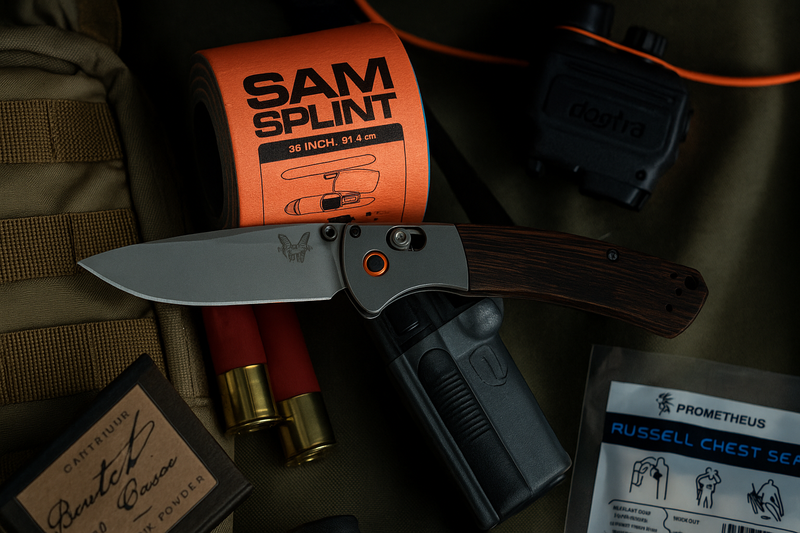
Chest seals
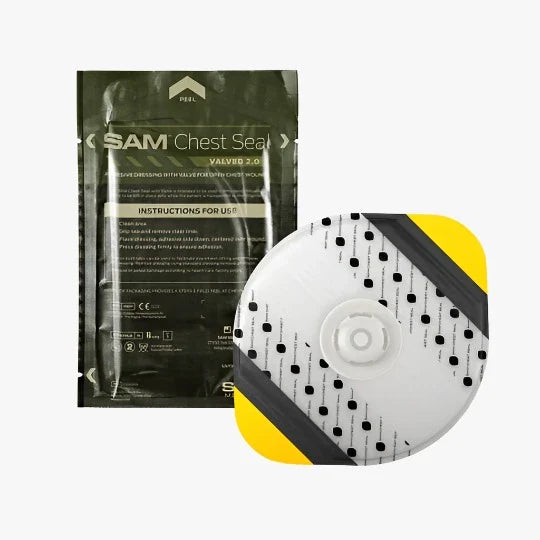
A chest seal is a self-adhesive dressing that covers a penetrating injury to the chest. Vented models let air escape from the chest cavity; non-vented models seal tightly.
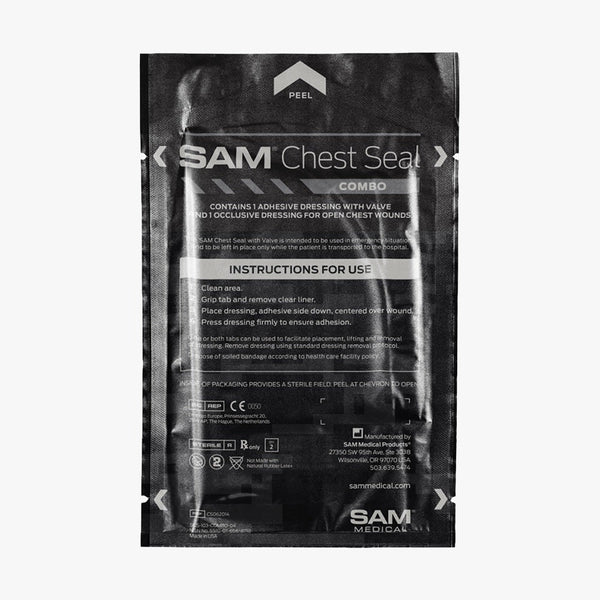
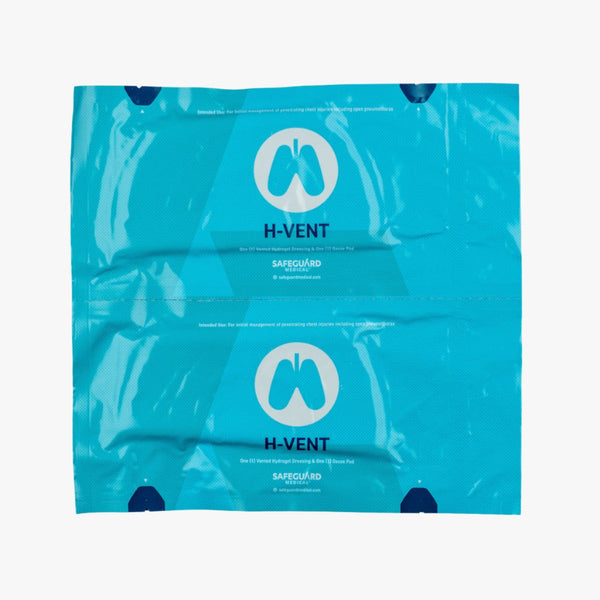
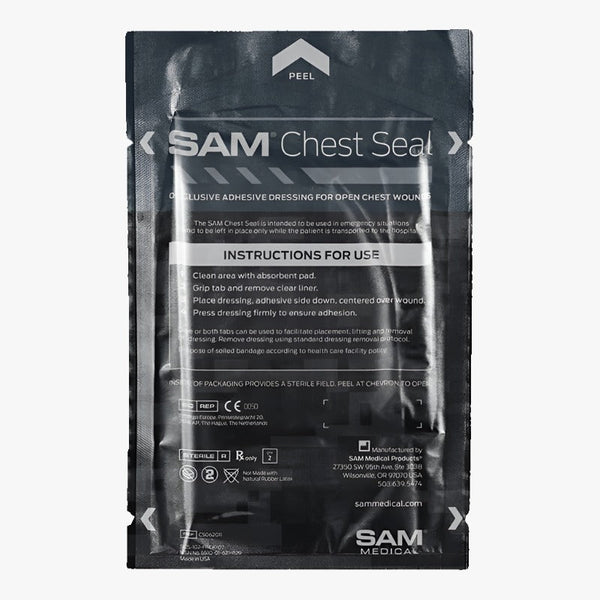
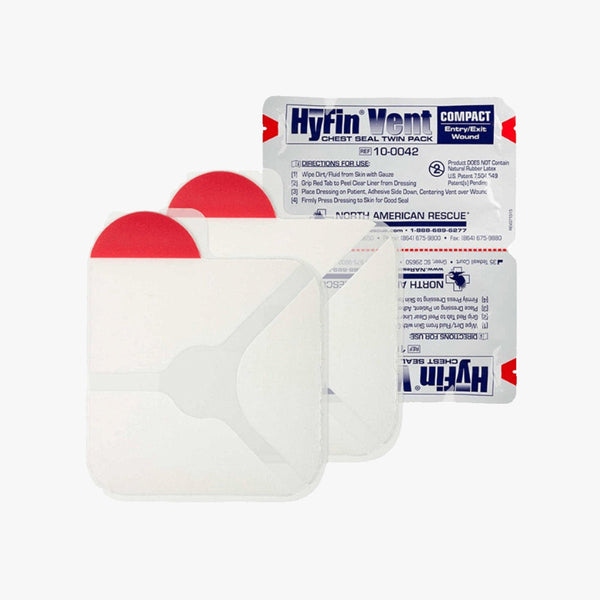
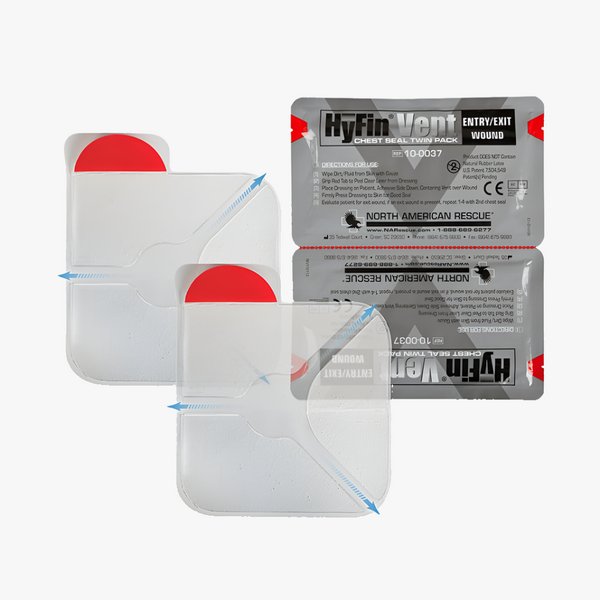
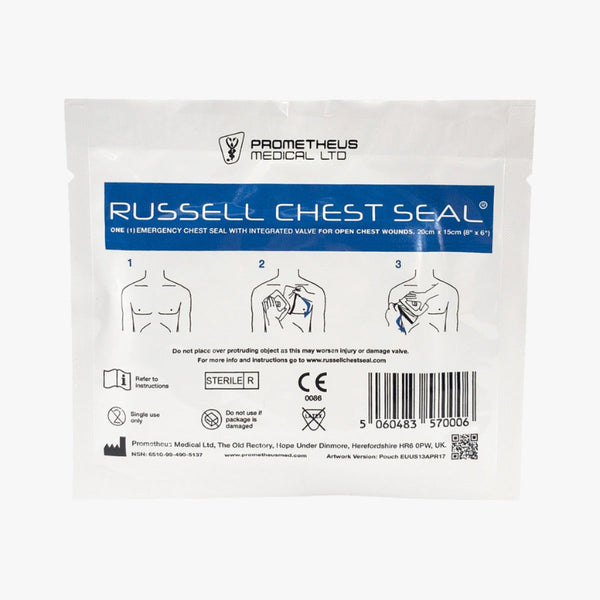
Chest seals from North American Rescue, SAM Medical, H&H Medical and Prometheus Medical, in vented and non-vented versions. Several are sold in twin packs, since a penetrating injury often has both an entry and an exit wound.
Chest seals — all products
Frequently asked questions about chest seals
Should I choose a vented or non-vented chest seal?
Vented dressings let air escape from the chest cavity and are the most common choice in today's trauma kits. Non-vented ones seal tightly and are also used, but demand more of whoever is managing the patient if the condition deteriorates. If you only have one choice in the kit, the vented one is the most forgiving.
Why are chest seals sold in twin packs?
A penetrating injury often has both an entry and an exit wound, and both need to be covered. A twin pack means you don't have to carry two separate packages or discover that the second dressing is in someone else's kit.
Will a chest seal stick to bloody skin?
The adhesives are developed for exactly that, but adhesion is affected by blood, sweat, hair and cold. The models differ here, which is one of the most common reasons for choosing a particular brand. Also check the expiry date — the adhesive deteriorates over the years, even in an unopened package.
What size chest seal do I need?
A larger dressing gives you margin on irregularly shaped wounds and on wounds close to the shoulder or flank. Compact models exist so they can be carried in a pouch without taking up space. Many solve it with a large one in the bag and a compact one on the body.
Guides for Chest seals
Comparisons of equipment in this category, written by our anaesthetists.