Wound cleansing
Wound cleansing comes in two formats: bottles for the station, and individually packed wipes or spray for what you carry with you.
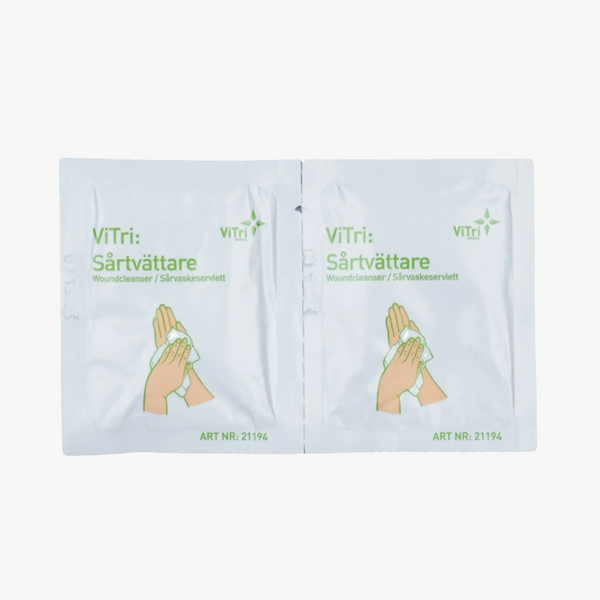
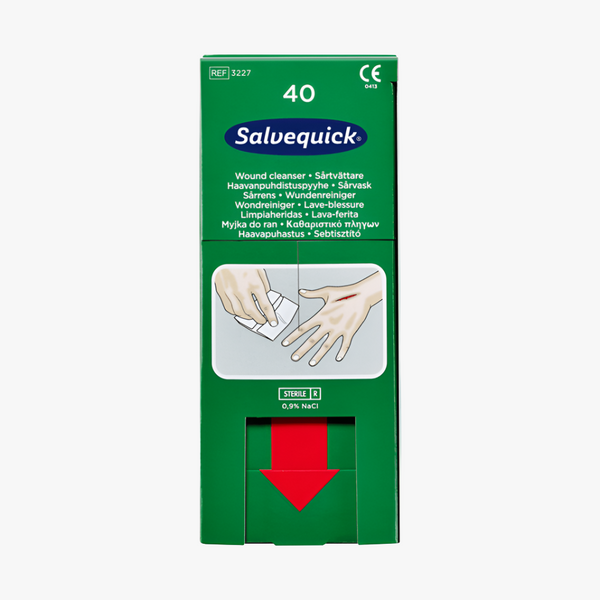
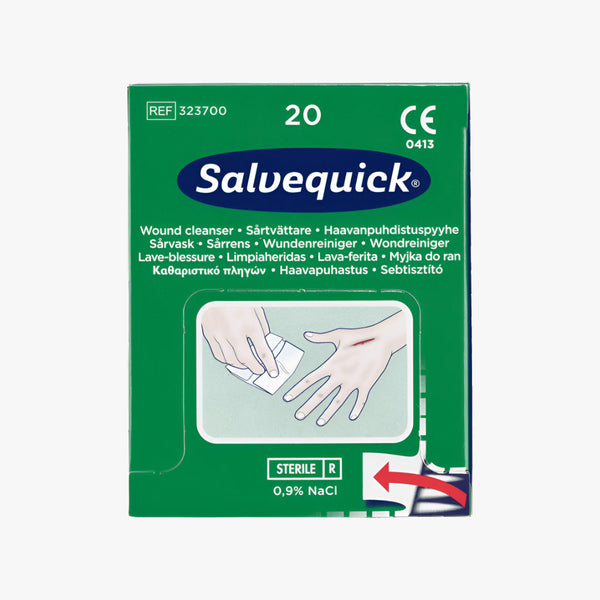
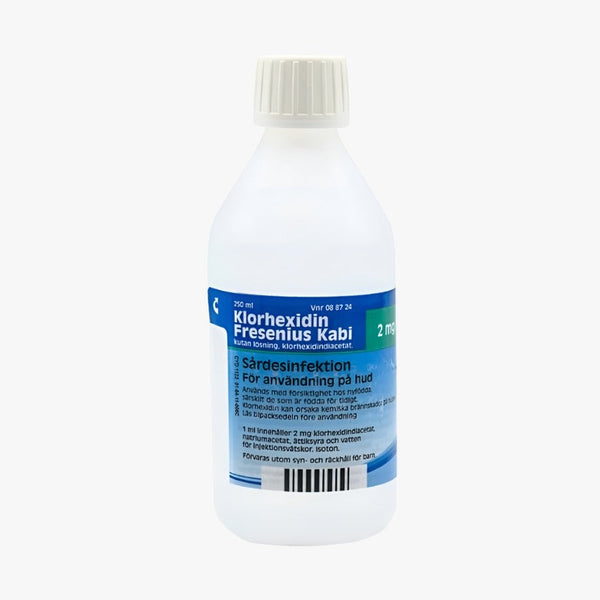
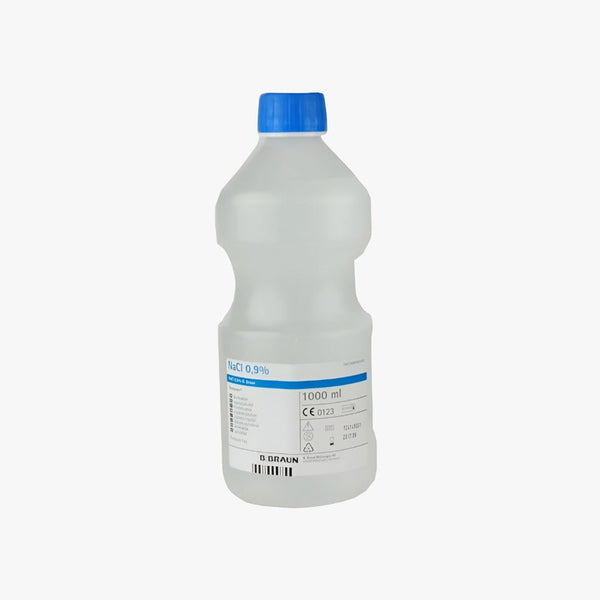
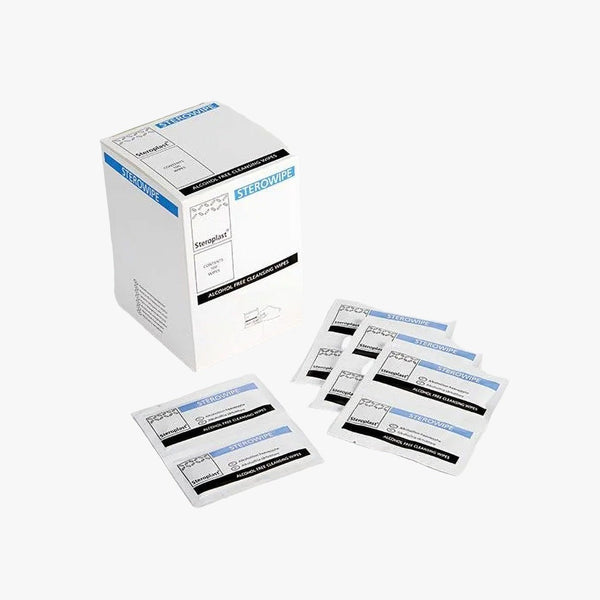
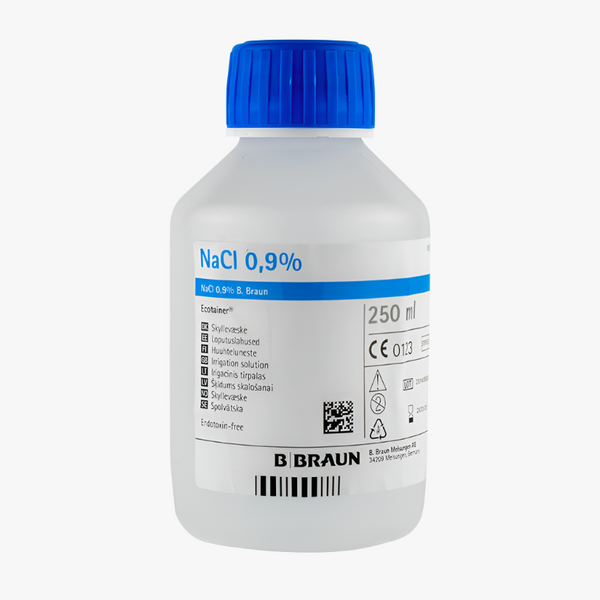
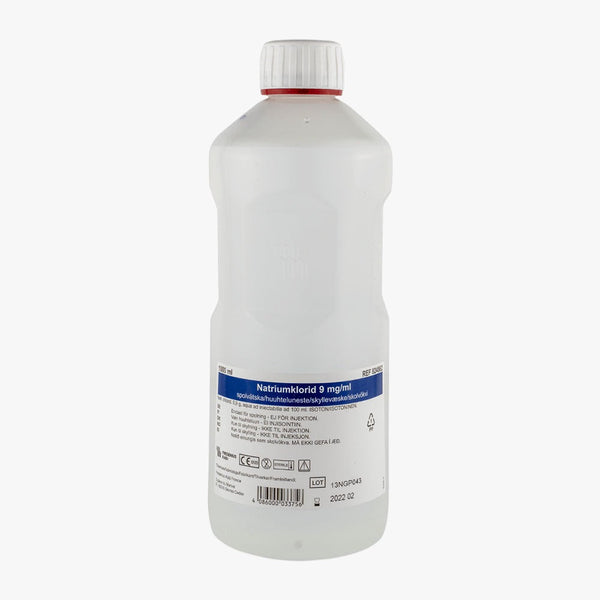
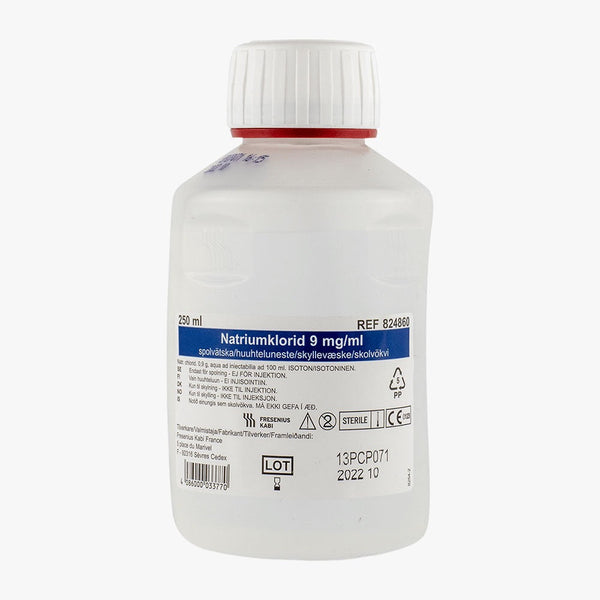
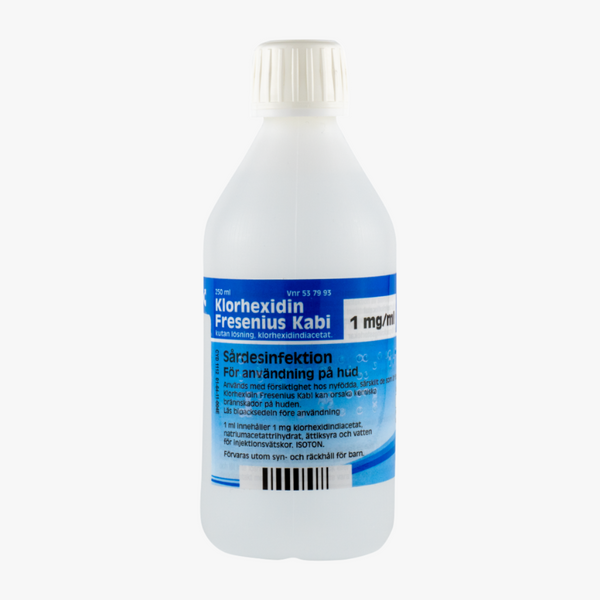
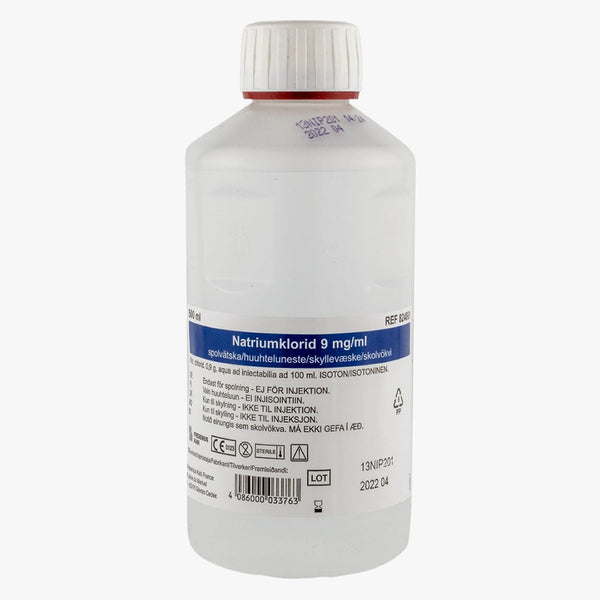
Sterile saline and chlorhexidine in bottles from 250 ml to one litre, individually packed wound-cleansing wipes and rinse spray for eyes and wounds. Fresenius Kabi, B. Braun, Cederroth, Vitri and Steroplast.
Wound cleansing — all products

Frequently asked questions about wound cleansing
What is the difference between saline and chlorhexidine?
Sodium chloride 9 mg/ml is a sterile salt solution at the same concentration as body fluids and is used for irrigation. Chlorhexidine is a disinfectant intended for wound cleansing. They serve different purposes, and which one is appropriate depends on the wound and on what your organisation's own procedures specify.
Which bottle size should I choose?
250 ml is enough as a single-use format and takes up the least space. 500 ml and 1000 ml suit places where several wounds are treated or larger areas need rinsing, typically a workplace station or a vehicle bag. Bear in mind that an opened bottle does not keep as long as an unopened one.
What is the advantage of individually packed wound wipes?
Each wipe is packed individually, so the contents are unopened when used and you avoid carrying a bottle that can leak. They tolerate cold and heat in a vehicle better than opened solutions and are the format that normally works in a carried kit.
Can rinse spray be used on the eyes?
Cederroth's spray is intended for both eyes and wounds and has a nozzle designed for the purpose. An ordinary wound cleansing solution or chlorhexidine, on the other hand, must not be used in the eye. Organisations with a splash risk should have dedicated eyewash in place, positioned where the splash risk actually exists and not in a locked cabinet.