Written by the Milistuff editorial team – anaesthesiologists and CPR instructors. This text does not replace hands-on training, and in a real emergency the instructions from the emergency operator (112) apply.
If you search for "best tourniquet" you will rarely find a real test. What exists is something better: an independent list of the limb tourniquets that have worked in the field, compiled by the US expert committee for tactical casualty care, CoTCCC. This guide is based on that list and on our own experience as instructors – and it is written for those who carry a tourniquet on duty: security staff, fire and rescue services, the armed forces or hunting parties.
Short answer
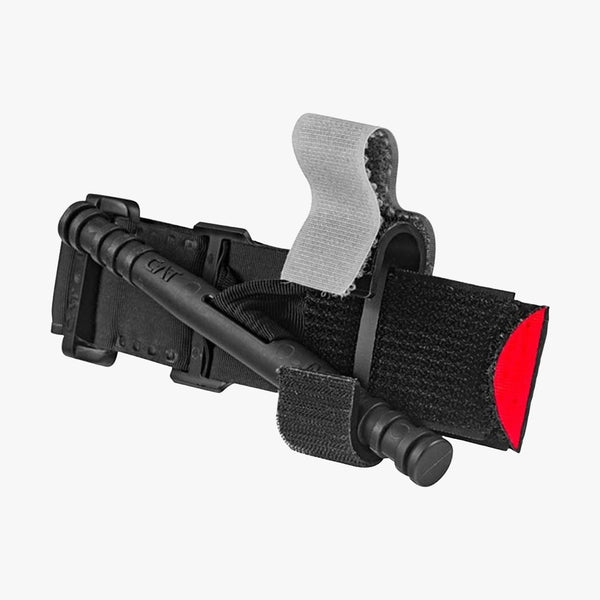
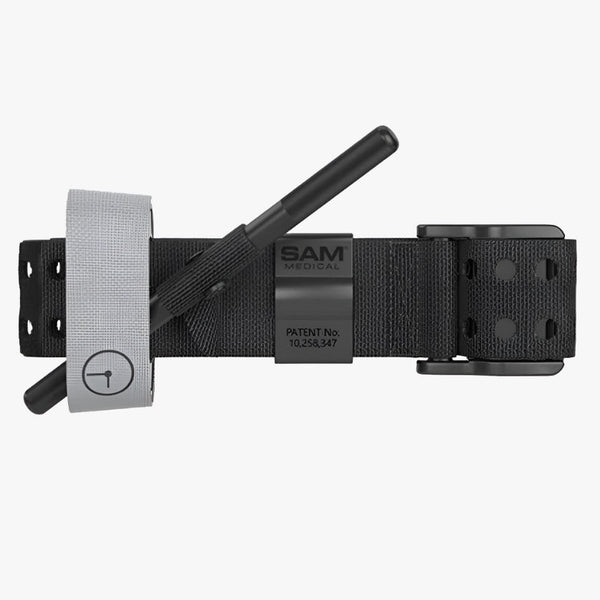
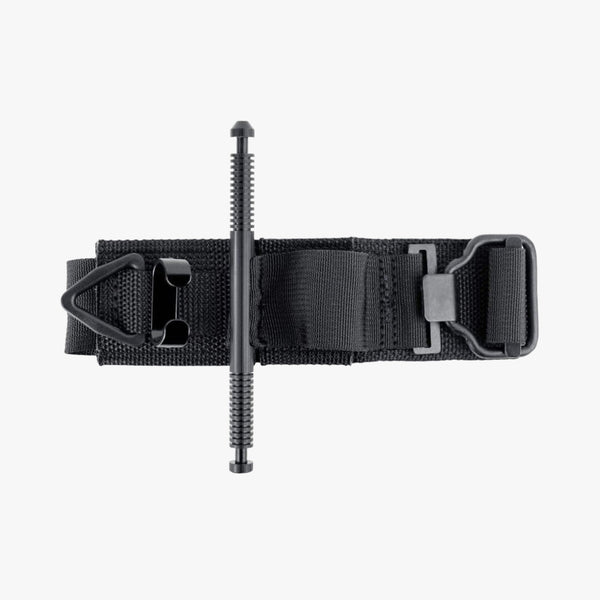
- Choose a model that is on the CoTCCC list. Of the models we sell, that applies to CAT Gen 7, SAM XT and SOFTT-W.
- Choose the same model as the rest of your team. Whoever is helping you must recognise your tourniquet without having to think.
- Train on a separate training tourniquet. Your live tourniquet should stay untouched and be easy to reach with either hand.
The differences between the three are smaller than the difference between a trained and an untrained user.
What the CoTCCC list is – and is not
The Committee on Tactical Combat Casualty Care (CoTCCC) publishes the Tactical Combat Casualty Care (TCCC) guidelines and a list of recommended devices. The most recently published version, dated 15 December 2021, includes these non-pneumatic limb tourniquets among others: CAT Gen 7, SAM Extremity Tourniquet (SAM XT) and SOF Tactical Tourniquet Wide (SOFTT-W). The list also includes some models we do not sell, such as RMT, TMT and TX2/TX3.
The list is not an official type approval, and it is written for US military medicine. But it is based on field data and testing, and it is the closest thing to an independent "best tourniquet" test that exists. A model that is not on the list is not automatically bad – but it does not have the same evidence behind it.
CAT Gen 7, SAM XT and SOFTT-W – the differences that matter
| CAT Gen 7 | SAM XT | SOFTT-W | |
|---|---|---|---|
| Buckle | Single-routing buckle; the strap is pulled through and secured with hook-and-loop | TRUFORCE buckle that locks once the strap has been tightened with the right force | Buckle that opens – can be placed around a trapped arm or leg without threading it on |
| Windlass | Polymer | Aluminium | Aluminium |
| Strength | The most widely used model – most people have trained on it | The lock reduces the risk of slack being left before the windlass is turned | Wide strap and an opening design |
| Keep in mind | Slack must be pulled out properly before turning | You have to trust the lock and not re-tighten unnecessarily | More steps to practise, especially one-handed |
CAT Gen 7 is standard in many agencies and military units. The advantage is recognition: if you take over a casualty from another organisation, chances are it is a CAT that has been applied. Available in black and orange.
SAM XT works on the same basic principle but has a buckle that clicks into place when the strap is tight enough. That helps a stressed user remove the slack before turning the windlass. Available in black and orange.
SOFTT-W has a wide strap and a buckle that can be opened, so it can be placed around a limb that is trapped. It takes a little more practice to handle confidently, but the opening buckle is an advantage when the casualty cannot be moved, for example when trapped.
Black or orange?
Colour is a tactical question, not a medical one. Black is less visible on a uniform. Orange is found faster in a bag, a vehicle or a cabinet at a workplace – and is clearly visible to whoever takes over the patient. Many choose black on the body and orange in vehicles and fixed stores.
SWAT-T and T-RING – good tools, but not the same thing
SWAT-T is an elastic band without a windlass: it is stretched, wrapped and tucked in. It is not on the CoTCCC list of limb tourniquets. Its strengths are that it is flat, light and can be used as a pressure bandage or on thin limbs. If SWAT-T is to be your only tourniquet, you must have practised that specific technique – it is completely different from a windlass tourniquet.
T-RING is a tourniquet for fingers and toes, not for arms or legs. It belongs in the medical bag for distal injuries, not in the IFAK as a replacement for a CAT.
How to use a windlass tourniquet – briefly
The European Resuscitation Council (ERC) 2025 first aid guidelines describe a stepwise approach: direct pressure, a plain or preferably haemostatic dressing with continued pressure and – for life-threatening bleeding from an arm or leg that is not controlled by pressure – a tourniquet as soon as possible.
- Call 112 or make sure someone else does.
- Place the tourniquet 5–7 cm above the wound, not over a joint.
- Remove all slack before turning the windlass.
- Turn until the bleeding slows and stops. It hurts for the casualty; that is expected.
- Lock the windlass and note the time on the tourniquet or the patient.
- Do not loosen it. It should be removed by healthcare professionals.
If one tourniquet is not enough, a second may be needed above the first. For bleeding from the groin, armpit or neck, a limb tourniquet cannot be used – there, direct pressure and wound packing with gauze or a haemostatic dressing apply.
Genuine or counterfeit?
Counterfeit CAT tourniquets are in circulation, and US authorities have warned about copies whose windlass broke in real use. Buy through established supply chains, be suspicious of a price that seems too good to be true, and inspect the buckle, windlass and markings when you unpack it. A tourniquet is not the place to save money.
Carrying, storage and training
The tourniquet must be reachable with either hand, even if you are injured yourself. Many carry it in an open tourniquet holster on the belt or vest rather than at the bottom of a bag. The packaging should be easy to open, and you should have prepared it according to the manufacturer's instructions so that it can be applied quickly.
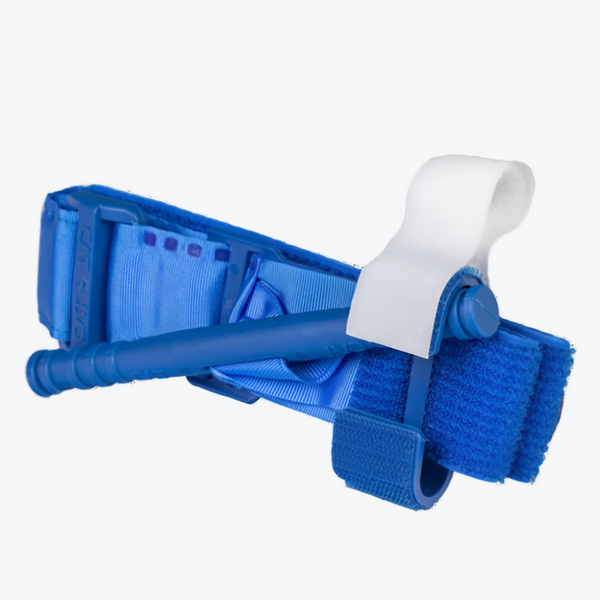
Train with a separate unit, such as the CAT Blue Trainer – blue so that it is never mistaken for live equipment. Repeated tightening wears the strap and buckle, so a tourniquet that has been used for training should not go back into service.
The full range is under Tourniquets, and the rest of our bleeding control equipment under Medical.
Sources
- CoTCCC: Recommended Devices & Adjuncts (15 December 2021)
- European Resuscitation Council Guidelines 2025 First Aid
- Swedish Resuscitation Council: The ABCDE concept and SX-ABCDE (in Swedish)
- Swedish National Board of Health and Welfare: Stop the bleeding (in Swedish)